Carnegie Hall
Discover New York’s Carnegie Hall, an amazing performance hall. Built on the mandate of Andrew Carnegie in 1890, this hall is one of the most famous in the United States for music concerts of different styles. Carnegie Hall offers more than 100 performances per season and can accommodate 2,800 people. So if you go to New York, you will probably find several shows going on all the time. Another well-known Manhattan venue is Radio City Music Hall, which is the largest theater in the United States and offers amazing shows and performances throughout the year.
Carnegie Hall can be considered a classic and historic venue, artists and bands like the Beatles, Frank Sinatra, Phil Keaggy and Edith Piaf have performed there. In the beginning, Carnegie Hall was a space exclusively dedicated to classical music, conductors like Leopold Stokowski and pianists like Sergei Rachmaninoff had a marked presence there, but over time this began to change. Carnegie Hall opened a space for jazz and blues, in the following years artists of this genre like Charlie Parker, Miles Davis and Billie Holliday sold out. You’ll also find the Rose Museum, which features many of the old theater programs, as well as photos, videos and more. Stop by if you have time, as it offers a guided tour! Carnegie Hall is located next to Central Park, which is a must-see tourist spot in New York, and you can’t miss it.
History
Carnegie Hall is named after Andrew Carnegie, who funded its construction. It was intended to house the Oratorio Society of New York and the New York Symphony Society, of which Carnegie was on the boards of directors. Construction began in 1890, and was carried out by Isaac A. Hopper and Company. Although the building was commissioned as early as April 1891, the official premiere took place on May 5, with a concert conducted by conductor Walter Damrosch and composer Peter Ilyich Tchaikovsky.
The hall was owned by the Carnegie family until 1925, when Carnegie’s widow sold it to Robert E. Simon, a property manager. When Simon died in 1935, his son, Robert E. Simon Jr. took over. In the mid-1950s, changes in the music industry prompted Simon to propose the sale of Carnegie Hall to the New York Philharmonic, which gave the majority of annual concerts in the hall.
Rock and roll music was first introduced at Carnegie Hall when Bill Haley and his Comets performed at a concert on May 6, 1955. Rock artists were not regulars at the Hall until February 12, 1964, when the Beatles performed two concerts on their historic first trip to the United States. Agent Sid Bernstein persuaded Carnegie officials to allow a Beatles concert at the hall and argued that it would “further international understanding” between the United States and Britain.
Video
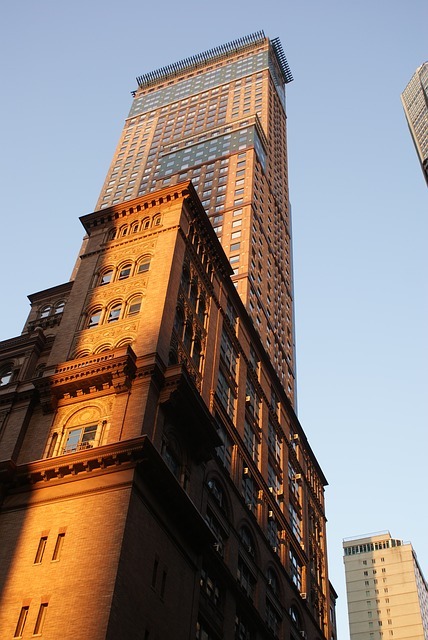
Carnegie Hall is one of the last great buildings in New York City, built entirely of masonry, with no metal framework. However, when several studios were added to the building in the early 20th century, metal framing was erected around parts of the building. The exterior is narrow Roman brick in a soft shade of ochre, with terracotta and brownstone detailing. The foyer eschews modern Baroque theaters and takes its cue from the Florentine Renaissance style of Filippo Brunelleschi’s Chapel of the Pazzi: white plaster and gray stone form a harmonious whole with arched openings and Corinthian columns supporting an unbroken cornice, with semicircular illustrations above. The famous white and gold interiors are equally sober.
How to get there
Address: 881 7th Ave, New York, NY 10019, USA